This post contains affiliate links. As an Amazon Associate I earn from qualifying purchases at no extra cost to you.
🪮 The Brush Question I Get All the Time
“Jonathon, does it really matter what brush I use?”
Short answer: yes. Long answer: absolutely yes, and I’m about to tell you why.
Here’s the thing — I see clients walk in with beautiful color, a great cut, and then they tell me their hair is frizzy, breaks easily, or just won’t cooperate at home. Nine times out of ten? It’s the brush. Not the products. Not the technique. The brush.
You can have the best shampoo, the most expensive styling cream, and a $300 blow dryer, but if you’re using the wrong brush, you’re working against yourself. So let’s fix that.
💡 Why Your Brush Actually Matters
Here’s what most people don’t realize: brushes aren’t interchangeable. Each type is designed for a specific job, and using the wrong one can cause breakage, frizz, or just make styling take twice as long.
Think of it like this — you wouldn’t use a butter knife to cut a steak, right? Same concept. A paddle brush is amazing for some things and terrible for others. A round brush gives you volume and shape, but if you use it wrong, you’ll end up with a tangled mess.
The brush you choose affects:
- How much breakage you get (especially if your hair is fine or chemically treated)
- How smooth your blowout looks (the right bristles make all the difference)
- How long styling takes (the right brush speeds everything up)
- Whether you’re adding volume or smoothing it down (different brushes = different results)
So yeah. It matters.
🔍 The Main Brush Types (And What They’re Actually For)
Let me walk you through the brushes I recommend most often — and more importantly, when to use each one.
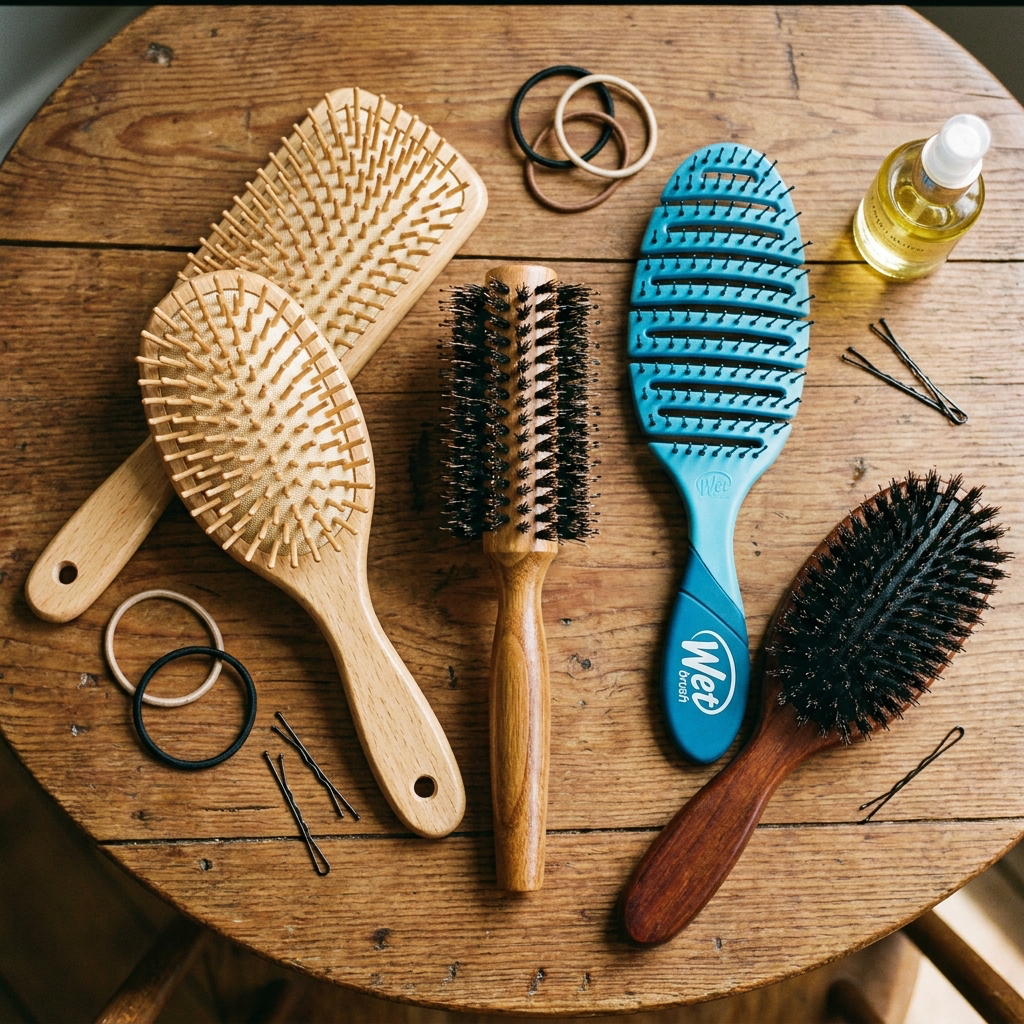
Paddle Brush
This is your everyday detangling and smoothing brush. It’s flat, wide, and usually has a cushioned base with either plastic or boar bristles.
Best for: Detangling, smoothing long hair, distributing natural oils from roots to ends, brushing out dry hair before washing.
Not great for: Styling with a blow dryer (it doesn’t create shape or volume), fine hair that needs more precision.
What I tell clients: If you have long, thick hair and you just need to brush it out in the morning or before bed, paddle brush is your go-to. It covers a lot of surface area fast and doesn’t pull as much as smaller brushes.
Round Brush
This is the styling workhorse. Round brushes come in different barrel sizes, and the size you choose depends on your hair length and what kind of volume or curl you want.
Best for: Blow-drying, adding volume at the roots, creating smooth curls or waves, giving your hair shape and movement.
Not great for: Detangling (you will get tangled, I promise), air-drying, brushing out dry hair.
What I tell clients: If you want a salon-quality blowout at home, you need a round brush. Small barrel for short hair or tighter curls. Medium barrel for shoulder-length hair. Large barrel for long hair and loose waves. And here’s the key — you wrap sections of damp hair around the brush as you blow-dry. That’s how you get lift and smoothness at the same time.
→ Related: Why Does Hair Look Thinner in Photos? (And How to Fix It)
Vented Brush
This one has gaps between the bristles so air from your blow dryer flows through. It’s lighter, faster, and less precise than a round brush.
Best for: Quick blow-drying when you just want smooth, dry hair without a ton of styling, thick hair that takes forever to dry, casual everyday styling.
Not great for: Creating volume or shape, precision styling, fine hair that needs more control.
What I tell clients: If you’re short on time and you just want your hair dry and relatively smooth, vented brush is your friend. It’s not going to give you a polished blowout, but it gets the job done fast.
Boar Bristle Brush
These brushes have natural boar bristles (or a mix of boar and nylon). The bristles are softer and more flexible, and they’re amazing at distributing your scalp’s natural oils down the hair shaft.
Best for: Fragile hair, adding shine, smoothing hair without static, finishing a style to polish it up.
Not great for: Detangling thick or curly hair, wet hair (boar bristles don’t glide through wet hair easily).
What I tell clients: This is your shine and smoothness brush. If you have chemically treated hair that’s prone to breakage, boar bristle brushes are gentler than plastic bristles. They’re also great for a final pass-through after styling to smooth everything down and add shine.
Wet Brush / Detangling Brush
This is the brush with flexible plastic bristles designed to glide through wet hair without pulling or breaking it.
Best for: Detangling wet hair, kids’ hair, curly or textured hair, anyone prone to breakage.
Not great for: Styling with heat, creating volume or shape.
What I tell clients: If you’re detangling in the shower or right after, this is the brush you want. Regular brushes can snap wet hair because it’s more fragile when it’s wet. Wet brushes bend with the hair instead of pulling against it.
→ Related: How to Protect Your Hair While You Sleep (The Right Way)
📌 How to Choose the Right Brush for Your Hair Type
Okay, so now that you know what the brushes do, let’s talk about your hair specifically.
If You Have Fine or Thin Hair:
You need brushes that won’t pull or break your hair. Go for:
- Boar bristle brush for everyday brushing and shine
- Small to medium round brush for styling (large barrels are too heavy and can pull fine hair)
- Wet brush for detangling when your hair is damp
Avoid: stiff plastic paddle brushes with hard bristles — they can snap fine hair easily.
If You Have Thick or Coarse Hair:
You need brushes with enough grip and spacing to actually work through your hair. Go for:
- Paddle brush with nylon bristles for detangling dry hair
- Large round brush for blow-drying and adding shape
- Vented brush if you just want to dry your hair quickly without a lot of fuss
Avoid: tiny brushes that get overwhelmed by the volume — they’ll slow you down and cause frustration.
If You Have Curly or Textured Hair:
You need brushes that detangle gently and don’t disrupt your curl pattern. Go for:
- Wide-tooth comb or wet brush for detangling in the shower while conditioner is in
- Denman brush (a type of paddle brush with widely spaced rows) for defining curls
- Boar bristle brush if you’re smoothing hair into an updo or sleek style
Avoid: small round brushes (they’ll create tangles) and metal-bristle brushes (too harsh on curls).
If You Have Color-Treated or Damaged Hair:
You need brushes that minimize stress and breakage. Go for:
- Boar bristle brush for gentle everyday brushing
- Wet brush for detangling damp hair
- Round brush with ceramic or tourmaline barrel for heat styling (the ceramic distributes heat more evenly and reduces damage)
Avoid: brushes with metal bristles or rough plastic tips — they catch on fragile hair and cause breakage.
→ Related: How Often to Wash Color-Treated Hair (And Whether You’re Doing It Wrong)
⚠️ The Brush Mistakes I See Most Often
These are so common, and they’re so easy to fix once you know about them.
Using the same brush for everything
If you’re using a paddle brush to detangle, style, and blow-dry, you’re making your life harder. Each brush has a job. Use the right tool for the task and everything gets easier.
Brushing wet hair with the wrong brush
Wet hair is fragile. If you’re using a regular paddle brush or round brush on soaking-wet hair, you’re causing breakage. Use a wet brush or a wide-tooth comb instead.
Not cleaning your brush
Hair, product buildup, and oils collect in your brush over time. If you’re not cleaning it regularly, you’re just redistributing that buildup back into your clean hair. I tell clients: clean your brush once a week. Pull out the hair, wash it with shampoo and warm water, and let it dry completely.
Using a round brush that’s too small or too large
If your round brush is too small for your hair length, you’ll spend forever wrapping sections around it. If it’s too large, you won’t get enough tension to create shape. Match the barrel size to your hair length and the style you want.
Skipping the heat protectant
If you’re using a brush with heat styling (like blow-drying with a round brush), you need heat protectant. The brush itself doesn’t protect your hair from heat damage — the product does.
🛒 My Go-To Brush Recommendations
Here’s what I recommend to clients based on what I see work in the real world:
For everyday detangling (thick hair): [Mason Pearson Paddle Brush] — yes, it’s an investment, but it lasts forever and it’s incredibly gentle on hair.
For blow-drying and styling: [T3 Smooth Paddle Brush] or a ceramic round brush in the size that matches your hair length.
For wet detangling: [Wet Brush Original Detangler] — affordable, effective, works on all hair types.
For fine hair: [Boar bristle brush by Diane] — gentle, adds shine, doesn’t pull.
For curly hair: [Denman D3 Brush] — widely spaced bristles, great for defining curls without frizz.
(Joanie adds Amazon affiliate links here before publishing)
🎯 Ready to Get Your Brush Game Right?
Here’s the thing — choosing the right brush is one of those small changes that makes a surprisingly big difference. It’s not glamorous. It’s not a miracle product. But it’s one of those foundational things that makes everything else work better.
And if you’re ever not sure what brush to use, or you want personalized recommendations based on your hair texture and what you’re trying to achieve, that’s exactly the kind of thing we talk about in a consultation. I love helping clients figure out their at-home routine so their hair looks great between appointments.
Book a consultation with me and we’ll talk through your hair goals, what you’re working with, and what tools will actually make your life easier. Let’s get your hair looking the way you want it to look — at home and in the chair.